


You want to ensure the security of your WordPress hosting site from fraudulent activities. Implementing fraud prevention measures is crucial to safeguard your website and protect sensitive information. By following these 7 vital tips, you can enhance your site’s security and reduce the risk of falling victim to online fraud. Stay informed and proactive in deterring potential threats to your WordPress hosting site.
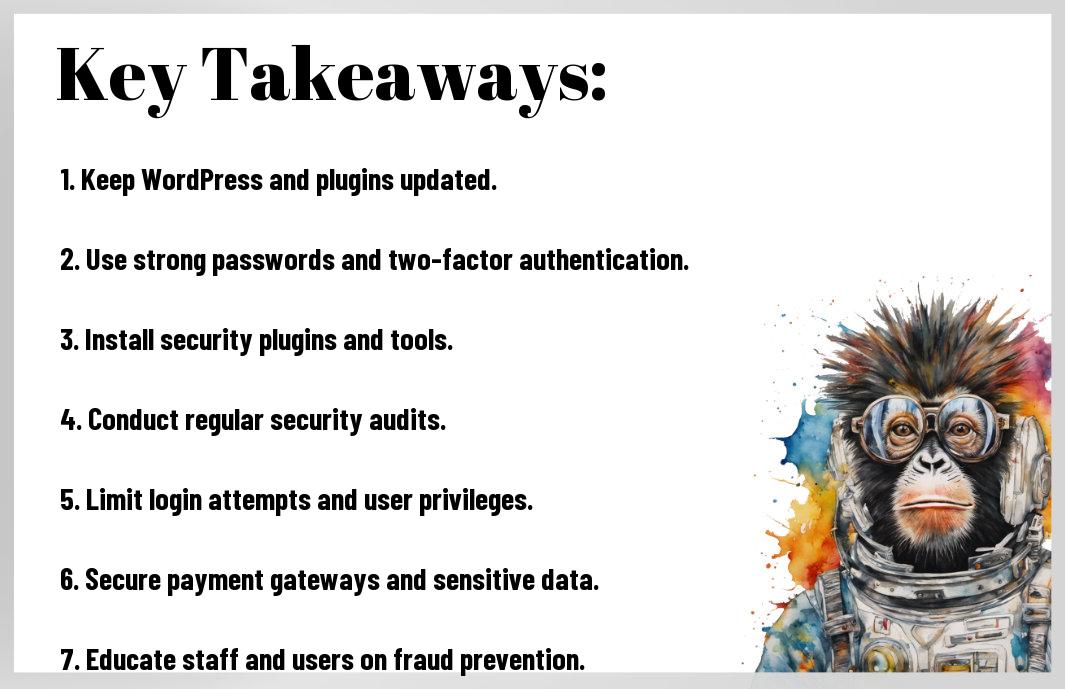
Key Takeaways:
- Regular Monitoring: Keep an eye on your WordPress hosting site for any suspicious activities or unauthorized access.
- Enable Two-Factor Authentication: Implement an extra layer of security to protect user accounts and prevent unauthorized logins.
- Install Security Plugins: Use reputable security plugins to scan for malware, vulnerabilities, and other potential threats.
- Keep Software Updated: Regularly update WordPress core, themes, and plugins to patch security vulnerabilities.
- Secure Payment Gateways: Use trusted and secure payment gateways to protect customer transactions from online fraud.
- Backup Your Website: Regularly backup your WordPress hosting site to ensure you can quickly recover in case of a security breach.
- Educate Users: Train your employees and users about the importance of strong passwords, phishing awareness, and other security best practices.

Understanding the Risks of Online Fraud
The Cost of Fraud to Businesses
While operating an online platform opens up a world of opportunities, it also comes with inherent risks, particularly in fraud. One fraudulent incident can have far-reaching consequences, leading to financial losses, damage to reputation, and erosion of customer trust.
Common Types of Fraud in WordPress Sites
One of the most concerning aspects of online fraud is the wide range of tactics fraudsters employ to exploit vulnerabilities in WordPress sites. From phishing scams to identity theft, the threat landscape is constantly evolving. Being aware of the common types of fraud is crucial for implementing effective prevention measures.
| Phishing Scams | Malicious Software |
| Identity Theft | Credit Card Fraud |
| Account Takeover | Refund Fraud |
| Payment Fraud | False Advertising |
| Transaction Fraud | SEO Spam |
Understanding the common types of fraud in WordPress sites is important for devising a robust fraud prevention strategy. By staying informed about the latest tactics used by fraudsters, site owners can better protect their platforms and users. Perceiving the evolving nature of online fraud is key to staying one step ahead of malicious actors.
Fraud Prevention Measures
- Implement Secure Payment Gateways
- Utilize SSL Certificates
- Enable Two-Factor Authentication
- Regularly Monitor Site Activity
- Update Plugins and Themes
By incorporating these important fraud prevention measures, WordPress site owners can create a secure online environment for their users. It is vital to proactively address potential vulnerabilities and stay vigilant against fraudulent activities. Perceiving the importance of fraud prevention is paramount in safeguarding your site’s integrity and reputation.
Essential Fraud Prevention Measures
Regular Software Updates and Patches
The importance of regularly updating your software and applying patches cannot be overstated when it comes to fraud prevention. Hackers often exploit security vulnerabilities in outdated software to gain unauthorized access to your site or manipulate sensitive information. By staying up-to-date with the latest software releases and promptly applying patches, you can minimize the risk of falling victim to fraudulent activities.
Strong Authentication Methods
Essential to fraud prevention on your WordPress hosting site is the implementation of strong authentication methods. This includes using multi-factor authentication, complex passwords, and biometric verification where possible. By requiring users to verify their identity through multiple means, you add an extra layer of security that makes it more difficult for fraudsters to gain unauthorized access to your site.
Implementing strong authentication methods not only helps protect your site from fraudulent activities but also enhances the overall security of your online presence. It is an important step in safeguarding sensitive data and ensuring that only authorized users have access to your WordPress hosting site.
Advanced Protective Strategies
- Implementing an SSL Certificate
- Utilizing WordPress Security Plugins
- Regularly Monitoring User Activity
- Implementing Two-Factor Authentication
- Regularly Updating WordPress and Plugins
- Conducting Security Audits
- Training Staff on Fraud Prevention Measures
Implementing an SSL Certificate
Advanced protective strategies include implementing an SSL certificate on your WordPress hosting site. This will encrypt data transmitted between your site and users, adding an extra layer of security and preventing unauthorized access to sensitive information.
Utilizing WordPress Security Plugins
With the rise of cyber threats, utilizing WordPress security plugins is crucial for safeguarding your site against fraud. These plugins offer a range of features such as firewall protection, malware scanning, and login security to prevent unauthorized access and keep your site secure.
The use of WordPress security plugins is a proactive approach to securing your site and defending against potential threats. By installing reputable plugins and keeping them updated, you can enhance the overall security of your WordPress hosting site.
Monitoring and Response
Setting Up Anomaly Detection Systems
The key to effective fraud prevention is staying one step ahead of potential threats. Keep your WordPress hosting site secure by setting up anomaly detection systems that can alert you to any unusual activity or patterns that may indicate fraudulent behavior.
Creating an Incident Response Plan
Pertaining to fraud prevention, having a well-thought-out incident response plan is vital. The plan should outline the steps to take in the event of a security breach, including who to contact, how to contain the breach, and how to mitigate any damage.
For instance, your incident response plan should designate a team responsible for handling security incidents, outline communication protocols for notifying customers and stakeholders, and detail the process for reviewing and updating security measures post-incident to prevent future breaches.
Building a Culture of Security Awareness
Training Employees and Users
On many WordPress hosting sites, the first line of defense against fraud is the people who use and manage the platform. Providing thorough training for employees and users on the importance of security measures, such as strong password hygiene, identifying phishing scams, and recognizing suspicious behavior, is important in creating a culture of security awareness.
Establishing and Enforcing Security Policies
Building a robust set of security policies and ensuring their enforcement is vital in preventing fraud on a WordPress hosting site. This includes setting guidelines for data access, privileged account management, and monitoring procedures. Regularly reviewing and updating these policies to address emerging threats is crucial in staying ahead of potential security breaches.
Conclusion
As a reminder, implementing fraud prevention measures on your WordPress hosting site is crucial to protect your business and your customers from potential security threats. By following these 7 vital measures such as using SSL certificates, enabling strong passwords, monitoring user activities, and keeping software up to date, you can greatly reduce the risk of fraud and maintain a secure online environment. Stay proactive in safeguarding your site and data to build trust with your users and ensure the longevity of your online business.
FAQ
Q: What are the 7 imperative fraud prevention measures to implement on your WordPress hosting site?
A: Implementing these 7 imperative fraud prevention measures on your WordPress hosting site can help protect your site from various types of fraudulent activities. These measures include implementing SSL certificates, setting up firewall protection, using secure passwords, installing security plugins, regularly updating plugins and themes, enabling two-factor authentication, and monitoring user activity logs.
Q: Why is it important to implement SSL certificates on your WordPress hosting site?
A: SSL certificates encrypt data transmitted between a user’s browser and your website, ensuring secure communication and protecting sensitive information such as login credentials, personal data, and payment details from being intercepted by cybercriminals. This helps build trust with your users and improves your site’s security.
Q: How does setting up firewall protection help in preventing fraud on your WordPress hosting site?
A: Firewalls act as a barrier between your site and malicious actors, filtering out suspicious traffic and blocking potential threats such as DDoS attacks, malware, and hacking attempts. By setting up firewall protection, you can effectively prevent unauthorized access and keep your site secure.
Q: What role do secure passwords play in fraud prevention on your WordPress hosting site?
A: Secure passwords are the first line of defense against unauthorized access to your site. By using complex passwords that combine letters, numbers, and special characters, you can make it harder for attackers to crack them. It is also imperative to change passwords regularly and avoid using the same password across multiple accounts.
Q: How can installing security plugins enhance fraud prevention on your WordPress hosting site?
A: Security plugins provide additional layers of protection by scanning your site for vulnerabilities, detecting potential threats, and implementing security measures such as malware scanning, firewall protection, and brute force attack prevention. These plugins help fortify your site’s defenses and minimize the risk of fraud.
Q: Why is it important to regularly update plugins and themes for fraud prevention on your WordPress hosting site?
A: Outdated plugins and themes are common targets for cybercriminals looking to exploit known vulnerabilities and gain unauthorized access to websites. By regularly updating your plugins and themes, you can patch security loopholes, fix bugs, and ensure that your site is equipped with the latest security enhancements to deter fraudulent activities.
Q: How does enabling two-factor authentication contribute to fraud prevention on your WordPress hosting site?
A: Two-factor authentication adds an extra layer of security by requiring users to provide a second verification method, such as a unique code sent to their mobile device, in addition to their password. This significantly reduces the risk of unauthorized access, even if login credentials are compromised, thereby strengthening fraud prevention measures on your WordPress hosting site.
Leave a Reply